
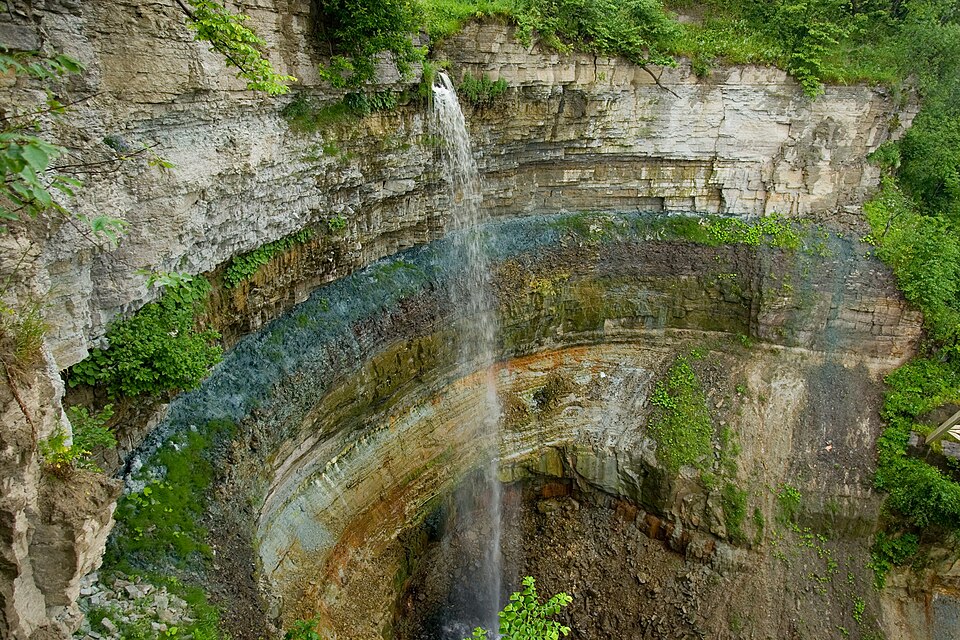
1. Geological and Visual Diversity
Valaste descends from the edge of the Ontika cliff, part of the Baltic Klint — a long limestone escarpment telling millions of years of history. The rock layers, shifting color tones (grey, brown, greenish-blue), fossils (especially traces of marine life), and the many carved steps allow visitors to “read” geological history layer by layer.
2. Seasonal Drama
In spring and during high water, the waterfall flows with force, looking strong and impressive.
In winter, a true natural spectacle occurs: the falls and spray freeze, and the wind shapes ice crystals into beautiful sculptures on tree branches and cliff walls. Light, icicles, and snow combine into a visually dramatic and photogenic landscape.
3. Accessibility and Multiple Viewpoints
Valaste is designed so that visitors can enjoy views from above, as well as by hiking up and down. Stairs and viewing platforms allow access down to the cliff and to observe the waterfall from the seaside, as well as along the shoreline. Infrastructure (steep stairs, platforms) makes the experience more convenient.
4. An Icon of Nature and Cultural Significance
Valaste has become recognized as a natural symbol of Estonia, valued not only for its aesthetic qualities but also for its scientific (geology, paleontology) and educational importance.
It offers a contrast — peaceful forest, cliff line, sea backdrop — a harmonious sensory experience away from city noise.